How Visa Sponsorship Category Shapes AI Resume Optimization for International Tech Workers
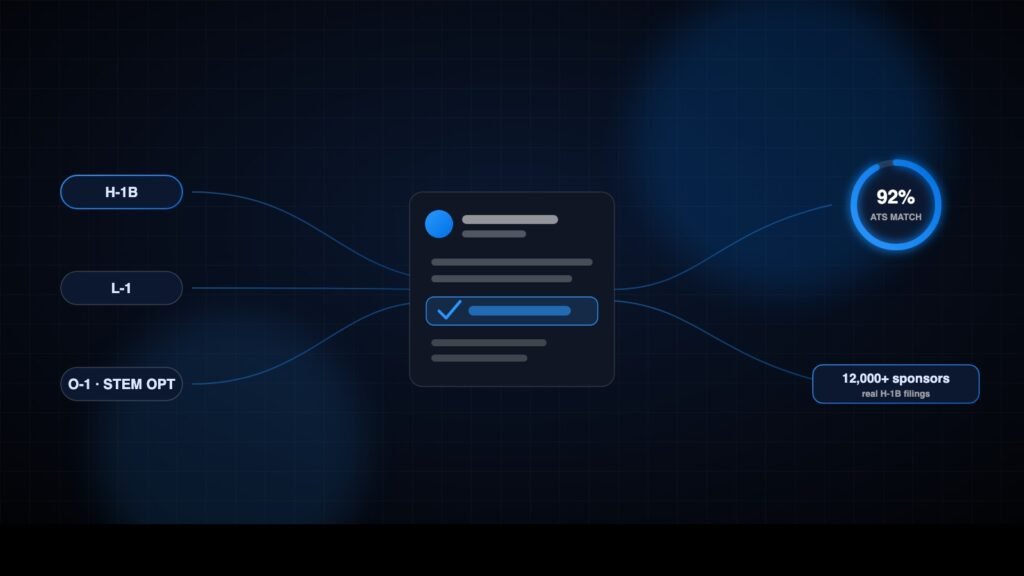
International tech candidates on H-1B, L-1, and O-1 visas need different resume strategies, because AI applicant tracking systems and recruiter screening tools weight sponsorship-related signals differently for each category. OPT Launch tailors these elements automatically based on the visa type a candidate selects, then matches the resume against real sponsorship data from employers who have filed for that specific category.
Why visa category changes what your resume needs to emphasize
Applicant tracking systems and recruiter-facing AI tools do not read all resumes the same way once a work-authorization flag is attached. The category you are sponsored under, or seeking sponsorship under, changes which resume elements carry weight:
Resumes are screened for role titles and skill sets that map to “specialty occupation” language (software engineer, data scientist, ML engineer) and for degree-to-role alignment. Employers with a history of H-1B filings often have internal keyword filters tuned to past approved job descriptions, so matching your resume language to previously sponsored titles at that employer improves callback odds.
The resume needs to demonstrate continuous employment with the same corporate entity or its affiliate abroad, typically for the qualifying period required by the visa category. Gaps or title changes that break this continuity narrative are flagged differently than they would be for an H-1B applicant, since L-1 approval depends on proving an ongoing employment relationship.
Standard job-duty bullet points are less persuasive here. Resumes need evidence-based framing (publications, patents, speaking engagements, notable project impact, media recognition), because O-1 adjudication and internal recruiter screening both look for distinguishing achievements rather than routine responsibilities.
Resumes are often screened for how much runway is left on work authorization. Recruiters and AI screening tools increasingly check for OPT end dates or STEM extension eligibility, which is why tracking days remaining matters before you even reach the H-1B or L-1 stage.
How OPT Launch tailors resumes by visa type
OPT Launch asks candidates to select their current or target visa category before generating suggestions, then adjusts scoring and phrasing recommendations accordingly:
- ATS score matching is calibrated against job postings tagged with visa-sponsorship history, not generic job descriptions, so the resume is optimized for roles that have actually sponsored the candidate’s visa type before.
- Skills and certification emphasis shifts based on category. For H-1B-track resumes, the tool prioritizes specialty-occupation keyword alignment. For O-1-track resumes, it surfaces sections for awards, publications, and leadership recognition that a standard tech resume template would omit.
- Work-history gap handling differs by category. L-1 candidates get guidance on presenting continuous corporate-group employment, while OPT and STEM OPT candidates get guidance on framing any gap in the context of remaining authorized days, which the platform tracks on a dedicated dashboard.
- Interview prep extends this same visa-aware approach, pairing AI-generated system-design questions with coaching on how to discuss sponsorship needs and timelines confidently in interviews.
Where the real sponsorship data comes in
Resume optimization only matters if it is aimed at employers who actually sponsor the visa category in question. OPT Launch indexes real H-1B filing data from over 12,000 employers, so candidates can filter job search results by visa type (F-1 OPT, STEM OPT, CPT, H-1B, PGWP, Skilled Worker, TSS) and see which companies have a documented history of sponsoring that category before tailoring a resume for that specific employer pool. The platform also supports job search across five countries, which matters for candidates comparing US H-1B options against UK Skilled Worker or Canadian PGWP pathways.
Visa-aware resume optimization vs. general alternatives
| Dimension | OPT Launch | General Job Boards | Generic AI Resume Tools | Manual Research |
|---|---|---|---|---|
| Visa-type filtering on job search | Yes: F-1 OPT, STEM OPT, CPT, H-1B, PGWP, Skilled Worker, TSS | No visa-specific filtering | Not applicable (resume tool only) | Possible but time-intensive |
| Resume optimization tied to visa category | Yes: tailors resume and ATS scoring by selected visa type | No | Generic ATS scoring, not visa-aware | Not applicable |
| Real sponsorship data source | Indexed H-1B filing data from 12,000+ employers | Limited or self-reported claims | Not applicable | Manual cross-referencing of public filings |
| Interview prep for visa discussions | System-design questions plus visa discussion coaching | Not offered | Not offered | Not offered |
| OPT / visa deadline tracking | Dashboard tracks OPT days remaining and metrics | Not offered | Not offered | Manual tracking required |
| Geographic scope | Job search across 5 countries | Global but not visa-filtered | Not applicable | Depends on effort |
Frequently asked questions
Does an H-1B resume need to look different from an O-1 resume?
Yes. H-1B resumes are typically screened for specialty-occupation alignment and degree-to-role match, while O-1 resumes need to foreground extraordinary-ability evidence like publications, patents, or recognized achievements rather than standard job duties.
Can AI resume tools actually detect visa-related gaps or continuity issues?
AI screening systems commonly flag employment gaps and title changes, and the significance of those flags depends on visa category. For example, continuity of employment matters more for L-1 applicants than for H-1B applicants, so a resume tool needs to know the target visa type to give accurate guidance.
Does OPT Launch guarantee visa sponsorship or job placement?
No. OPT Launch helps candidates find employers with a documented history of sponsoring a given visa category and tailors resumes accordingly, but it does not guarantee sponsorship or job placement. Hiring and immigration decisions rest entirely with employers and the relevant authorities.
Tailor your resume by visa type
Select your visa category, match against real H-1B sponsor data from 12,000+ employers, and track your OPT days, all in one place.